
Lecture –University of Amsterdam, Regional, Transnational and European Studies , 13 February 2025
Introduction
In the aftermath of war, the dead are often left behind—not just as physical remains but as unresolved historical, ethical, and political questions. The legacy of World War II remains particularly contentious between Germany and Russia, as the memory of the war has shaped national identities, political relations, and reconciliation efforts for decades. Central to this negotiation of memory is the treatment of war graves and the recognition of the soldiers who perished—especially German soldiers buried in Soviet territory.
This essay is a summary of my lecture given at the University of Amsterdam, Regional, Transnational and European Studies on 13 February 2025. It examines the postwar reconciliation process between Germany and Russia, focusing on the practical and diplomatic efforts to manage war graves and the role of youth exchange programs in shaping historical understanding and reconciliation. These case studies provide insight into how former adversaries negotiate history, commemoration, and political narratives.
The German Memory Landscape: Commemoration and Controversy
Following the surrender of the German Wehrmacht in 1945, Germany faced a moral and practical challenge in addressing the fate of its fallen soldiers. Around five million German soldiers were killed or went missing during the war, leaving many families in uncertainty regarding their loved ones’ final resting places. Postwar commemoration was largely a private matter, as the burden of guilt and destruction overshadowed collective remembrance.
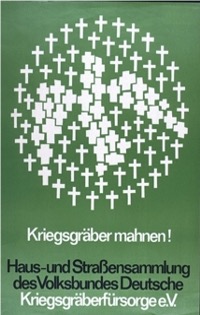
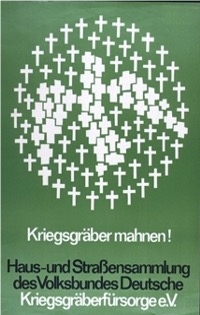
The Volksbund Deutsche Kriegsgräberfürsorge (VDK) emerged as a key organization responsible for managing German war graves, operating under the motto “Reconciliation over the graves.” The VDK maintained burial sites, provided families with information, and organized memorial events. However, its approach often leaned toward presenting German soldiers as victims of war rather than active participants in Nazi military aggression, a stance that sparked controversy, particularly after the 1985 Bitburg incident, where the presence of Waffen SS soldiers in a German cemetery reignited debates over Nazi commemoration.
In 1992, the German-Russian War Graves Agreement was ratified, ensuring legal protection for war graves in Russia and allowing for the maintenance and reburial of German soldiers. While this agreement paved the way for cooperative efforts, it also exposed enduring tensions, particularly in how both nations perceived and framed their historical narratives.
Soviet and Russian Memory Politics
For the Soviet Union, the Great Patriotic War (as WWII is commonly known in Russia) was foundational to national identity. With over 25 million dead, Soviet memory culture focused on heroism and sacrifice, leaving little room for acknowledging the losses of the enemy. Massive memorials, military parades, and Victory Day commemorations reinforced a national narrative of triumph and resilience.
During the Cold War, Soviet authorities restricted access to German war graves, claiming they no longer existed or refusing requests for visits. This began to change in the late 1970s when détente policies, including Willy Brandt’s Ostpolitik (1969–1974), opened limited pathways for engagement. Yet, the full-scale cooperation only materialized after the collapse of the Soviet Union in 1991, leading to the establishment of five major German war cemeteries in Russia.
Case Study 1: German Veterans and Local Responses to War Graves
A central element of German-Russian reconciliation efforts involved the exhumation and reburial of German soldiers, often accompanied by visits from German veterans and their families. These efforts, however, were met with mixed reactions from Russian communities.
While some Russian veterans and municipal leaders supported these efforts, others saw them as an insult to the memory of Soviet sacrifices. Newspapers often labeled German cemeteries as “fascist memorials,” and protests against their construction were common. In some regions, city councils blocked war cemetery projects, fearing backlash from local voters. In others, Germany facilitated infrastructure improvements—such as restoring roads and churches—in exchange for permission to construct cemeteries.
Although these visits fostered diplomatic goodwill, they did not necessarily lead to profound reconciliation. The commemorations remained formal and ceremonial, lacking critical engagement with the historical complexities of Nazi occupation and war crimes. The challenge in these reconciliation efforts lies in addressing the deeper questions of historical responsibility and memory without oversimplifying the past.
CASE Study 2: Youth Exchange and Reconciliation Programs
One of the most structured reconciliation efforts came through the VDK’s youth exchange programs, particularly the initiative “Work for Peace.” These programs, beginning in the 1950s, aimed to engage young Germans and Russians in joint efforts to maintain war graves while fostering dialogue and cultural exchange.
Originally launched in Belgium, these youth work camps expanded across Europe, eventually reaching Russia in the 1990s. By 2016, 42 such camps operated in 28 countries, involving nearly 1,500 participants annually.
While these programs allowed for hands-on engagement with history, they often lacked critical reflection on the ideological aspects of WWII. The focus on “peace and reconciliation” sometimes glossed over the realities of Nazi military aggression and Soviet repression. Russian participants often found it uncomfortable to work on graves of German POWs, as Soviet narratives historically depicted them as traitors. Moreover, discussions of Soviet wartime atrocities were largely absent from the program’s curriculum.
The Challenges of True Reconciliation
While the efforts of the VDK, German veterans, and youth exchanges have contributed to postwar dialogue, they fall short of achieving deep reconciliation due to several factors:
Both Germany and Russia have engaged in selective historical narratives. Germany has at times overemphasized its own suffering, while Russia continues to frame itself solely as a liberator, downplaying Soviet-era crimes. Unlike in France and Poland, where reconciliation developed organically through civil society initiatives, German-Russian reconciliation has been largely state-driven. This has limited the scope of societal healing at the local level. Russia’s use of WWII memory for geopolitical justification—especially in the current war in Ukraine—highlights how the past remains a political tool rather than a historical subject for open discussion.
Conclusion: Memory, Diplomacy, and the Path Forward
The reconciliation process between Germany and Russia over WWII war graves and memory remains a complex and unfinished project. The VDK’s war grave maintenance, veteran visits, and youth exchanges have laid the groundwork for dialogue, yet they remain largely symbolic rather than deeply transformative.
The core challenge remains: How can a nation commemorate its fallen soldiers without glorifying a military that served a genocidal regime? This question is especially pertinent in Russia, where memory politics continue to be contested and weaponized in contemporary conflicts.
Despite these challenges, one significant achievement stands out: Germany has successfully established permanent war cemeteries in Russia without major cases of vandalism or political annulment. This indicates a level of diplomatic success but also underscores the need for continued critical engagement with history. Moving forward, true reconciliation must involve deeper historical reflection, broader societal participation, and an honest reckoning with the past—beyond mere symbolic gestures. Only by acknowledging the full complexities of wartime history can Germany and Russia navigate the difficult terrain of memory politics and postwar reconciliation.
The content and research is based on following publications:
Janz, Nina. Remnants of Wehrmacht Soldiers : Burial and Commemoration Practices of German Soldiers of the Second World War in Russia and Europe, 1941-2023. 1 online resource. vols. Berlin: Peter Lang, 2024. https://public.ebookcentral.proquest.com/choice/PublicFullRecord.aspx?p=31202467.
Chapter, “Arbeit für den Frieden” (Work for Peace), in Dissertation: Die deutschen Soldatengräber zwischen Heldenverherrlichung und Zeichen der Versöhnung Historische und kulturwissenschaftliche Fallstudien zum Kriegstod” (German Soldiers’ Graves between Glorification of Heroes and Sign of Reconciliation – Historical and Cultural Studies on War Deaths), University of Hamburg, 2019.
Nina Janz, War Grave Tourism in Russia, Tourism and Reconciliation, edited by Jan-Hinnerk Antons, 2025.
 Dr Nina Janz
Leave a comment